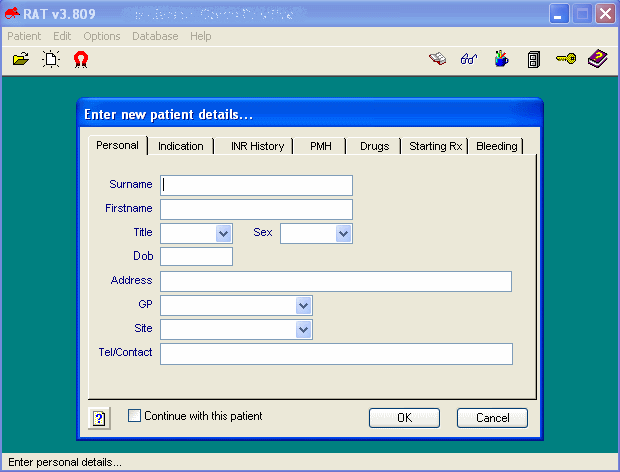
You will see there are 7 tabs
across the top. The first tab is the personal information.
The
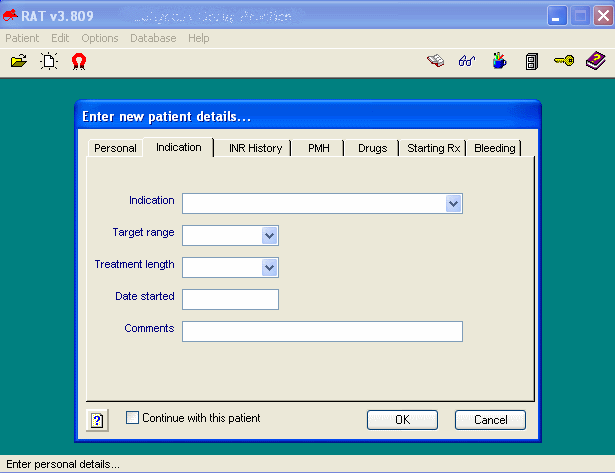
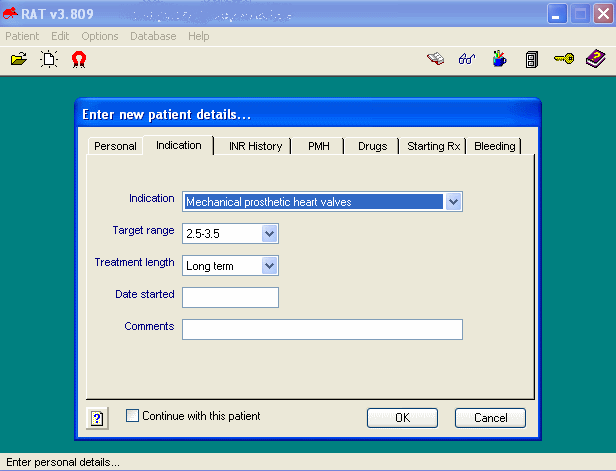
indication for warfarin is entered in the second tab. Choosing the
indication will automatically fill INR range and the treatment length
fields.
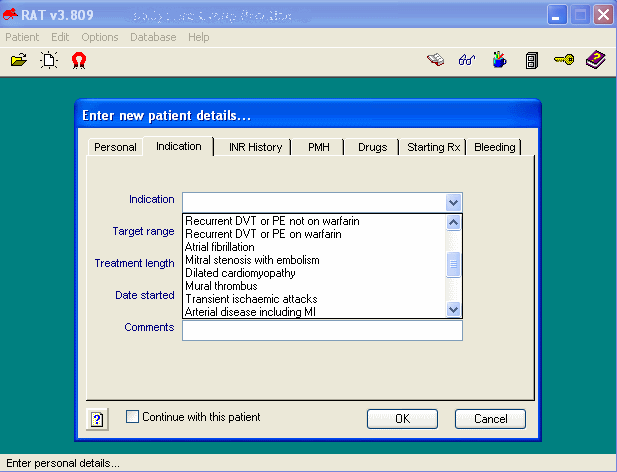
Here is
part of the list of indications.
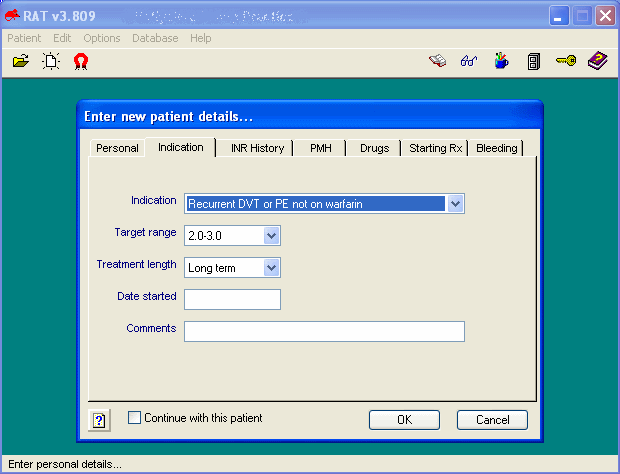
In this
case when 'Recurrent DVT or PE not on warfarin' is selected,
an INR range of '2.0-3.0' and treatment length of 'Long term' is
automatically entered. This indication is for recurrent thrombosis when the
patient is not taking warfarin. There is another indication 'Recurrent DVT
or PE on warfarin' that has an INR range of '3.0-4.0', This is a much
rarer event to have a thrombosis while anticoagulated.
Atrial fibrillation is the most
common indication for warfarin.
There is
one choice for mechanical valves with an INR range of 2.5-3.5. There are a
number of mechanical valves at different sites e.g. aortic, mitral. There
are a varied selection of INR ranges of each valve. You may have to alter
the INR range depending on recommendations from your cardiac surgery
department.
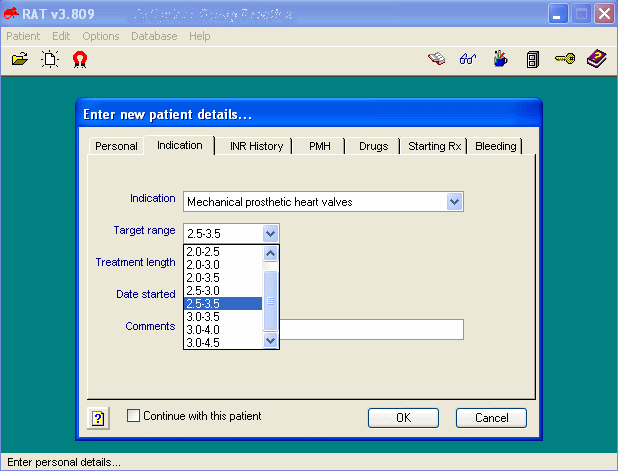
This
shows how to change the INR range.
The
third tab allows entry of historical data. The INR, the weekly mgs of
warfarin recommended for this INR, the date and the review period in
weeks.
RAT warfarin dosing is based on total mgs of
warfarin per week. The increments/decrements of warfarin are from 1mg to a
maximum increment of 7mg per week
RAT requires at least 3 entries and
preferably 5 to make recommendations for the new INR result.
The
fourth tab is for past medical history. This make be useful if you do not
have access to the current history of the patient. Otherwise it is better
to view the main clinical record of the patient.
The fifth tab is for drug history. It is not
advised to use tab for current drug history. Patients on warfarin are
usually on a number of concurrent drugs which can change frequently,
especially stopping or starting new drugs.
The
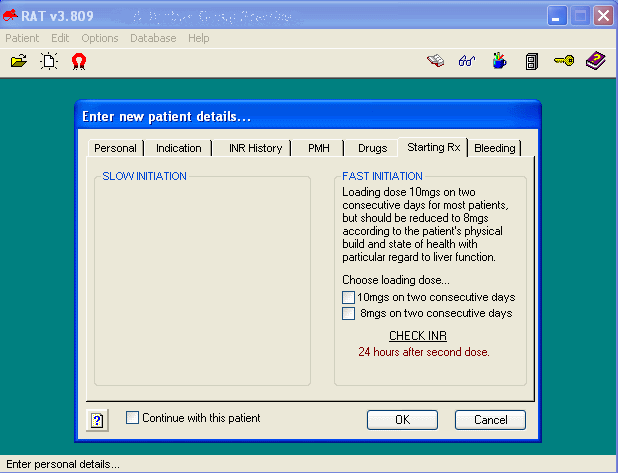
sixth tab is for intiation. Currently RAT supports fast initiation. Slow
initiation has not yet been implemented in RAT.
Please note RAT
should only be used by health professionals familiar with
warfarin management